
An effective email marketing strategy is all about sending the right message to the right people at the right time. Focus on building a quality email list, segmenting your audience, creating valuable content, and tracking performance. When done right, email marketing can deliver an average ROI of ₹3,500-₹4,000 per ₹100 spent.
Why Email Marketing Still Works in 2026
With social media algorithms constantly changing, email remains one of the most reliable marketing channels. According to recent industry reports, over 4.5 billion people worldwide use email, and nearly 60% of consumers say email influences their purchase decisions.
For businesses in cities like Mumbai, where competition is intense, email marketing gives you a direct line to your audience without relying on third-party platforms.
Step 1: Build a High-Quality Email List
Your strategy starts with the right audience. Buying email lists might seem tempting, but it often results in low engagement and high spam complaints.
Instead, focus on organic ways to grow your list:
- Website pop-ups offering discounts (e.g., “Get 10% off your first order ”)
- Lead magnets like free guides, checklists, or webinars
- Social media campaigns driving sign-ups
- In-store or event-based sign-ups (especially useful for local businesses)
Example:
A Mumbai-based cafe collected emails through a simple “Free Coffee on Your Birthday” offer. Within 3 months, they grew their list by 2,000 subscribers and saw a 25% increase in repeat customers.
Step 2: Segment Your Audience
Not all subscribers are the same. Sending the same email to everyone reduces effectiveness.
Segment your audience based on:
- Demographics (age, location)
- Purchase history
- Behavior (opened emails, clicked links)
- Interests
Example:
An e-commerce brand can send:
- New product launches to active buyers
- Discount offers to inactive users
- Personalized recommendations based on past purchases
Studies show that segmented campaigns can increase revenue by up to 760%.
Step 3: Create Valuable and Relevant Content
Your emails should not feel like spam; they should feel useful.
Focus on:
- Solving a problem
- Providing value
- Keeping content simple and engaging
Types of emails you can send:
- Welcome emails
- Promotional offers
- Educational content
- Newsletters
- Abandoned cart reminders
Pro Tip:
Keep your subject lines short and compelling. Emails with subject lines under 50 characters tend to have higher open rates.
Example Subject Lines:
- “Your 20% discount expires tonight.”
- “We saved your cart.”
- “3 tips to boost your sales today”
Step 4: Focus on Design and Mobile Optimization
Mobile devices open over 70% of emails. If your emails aren’t mobile-friendly, you’re losing a major chunk of your audience.
Make sure:
- Your design is clean and simple
- Fonts are readable
- CTA buttons are easy to tap
- Images load quickly
Example:
A fashion brand improved its email design for mobile users and saw a 35% increase in click-through rates within a month.
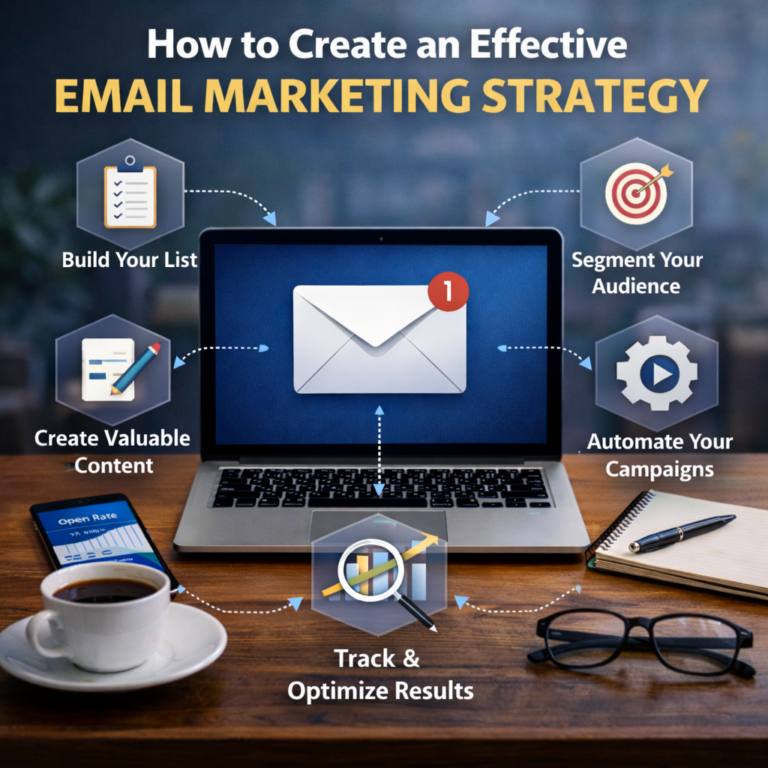
Step 5: Automate Your Email Campaigns
Automation saves time and ensures consistency.
Key automated emails include:
- Welcome series
- Birthday/anniversary emails
- Cart abandonment emails
- Re-engagement campaigns
Example:
Cart abandonment emails alone can recover 10-15% of lost sales. A simple reminder like “You left something behind” can significantly boost conversions.
Step 6: Personalization is the Game-Changer
Generic emails don’t work anymore. Personalization increases engagement and builds trust.
Use:
- Customer names
- Purchase history
- Location-based offers
Example:
Instead of saying, “Check out our new collection,” try this: “Hey Rahul, we picked these just for you.”
Personalized emails can deliver 6x higher transaction rates compared to generic ones.
Step 7: Track and Measure Performance
If you’re not tracking results, you’re guessing.
Key metrics to monitor:
- Open rate (average: 20-25%)
- Click-through rate (2-5%)
- Conversion rate
- Unsubscribe rate
Use these insights to improve future campaigns.
Example:
If your open rate is low, test better subject lines.
If clicks are low, improve your CTA or content.
Step 8: A/B Testing for Continuous Improvement
A/B testing helps you understand what works best.
Test variables like:
- Subject lines
- Email design
- CTA placement
- Send timing
Example:
A business tested two subject lines:
- “Flat 20% off.”
- “Don’t miss your 20% discount.”
The second one generated 18% higher opens, simply because of the urgency.
Step 9: Maintain Consistency Without Spamming
Consistency builds trust, but too many emails can annoy users.
Ideal frequency:
- 1-2 emails per week for most businesses
- More frequent emails during sales or campaigns
Always give users the option to manage preferences.
How The SMM Hub Can Help
Creating and managing email campaigns requires strategy, creativity, and consistent optimization. Partnering with the Best Digital Marketing agency in Mumbai can help you:
- Build targeted email lists
- Design high-converting campaigns
- Automate workflows
- Track performance and improve ROI
If you’re looking for an experienced email marketing agency in Mumbai or a reliable Digital marketing agency in Mumbai, The SMM Hub helps businesses turn email marketing into a powerful revenue channel.
Common Mistakes to Avoid
- Sending emails without segmentation
- Ignoring mobile optimization
- Overloading emails with too much content
- Not including a clear CTA
- Not analyzing campaign performance
Avoiding these mistakes can significantly improve your results.
Final Thoughts
Email marketing is not just about sending emails; it’s about building relationships. When done right, it becomes one of the most cost-effective ways to grow your business.
Whether you’re a startup or an established brand, a well-planned strategy can help you connect with your audience, drive conversions, and build long-term loyalty.
Key Takeaways
- Focus on building a quality, organic email list
- Segment your audience for better targeting
- Create valuable, user-friendly content
- Optimize emails for mobile devices
- Track performance and continuously improve
With the right approach, you can build a strong email marketing strategy that delivers consistent and measurable results for your business.